
Reimagine TYK2 Inhibition
for Plaque Psoriasis
Unmet Needs in Plaque Psoriasis
Plaque psoriasis is a systemic, multifactorial, chronic, immune-mediated disease that extends beyond the skin, often requiring systemic therapy to achieve meaningful, durable disease control.1-3
Systemic-appropriate patients with plaque psoriasis need more effective oral therapies that address immune dysregulation.4-10
TYK2’s Role in Plaque Psoriasis
TYK2 is an upstream regulator of multiple proinflammatory cytokines, including IL-23 and IL-17, that drive psoriasis pathogenesis and progression by fueling chronic inflammation, skin thickening, scaling, and itch, and systemic immune activation.11-16
Inhibiting TYK2 blocks IL-23 and IL-17 to correct immune dysregulation.17-19
Envudeucitinib is an investigational therapy not reviewed or approved by any regulatory agency.
What is envudeucitinib?
What is envudeucitinib?
Envudeucitinib is an Investigational, Next-Generation TYK2 Inhibitor
What is envudeucitinib?
Envudeucitinib is an investigational, next-generation, highly selective oral TYK2 inhibitor, precision-engineered for maximal, 24-hour TYK2 inhibition.17-23,a



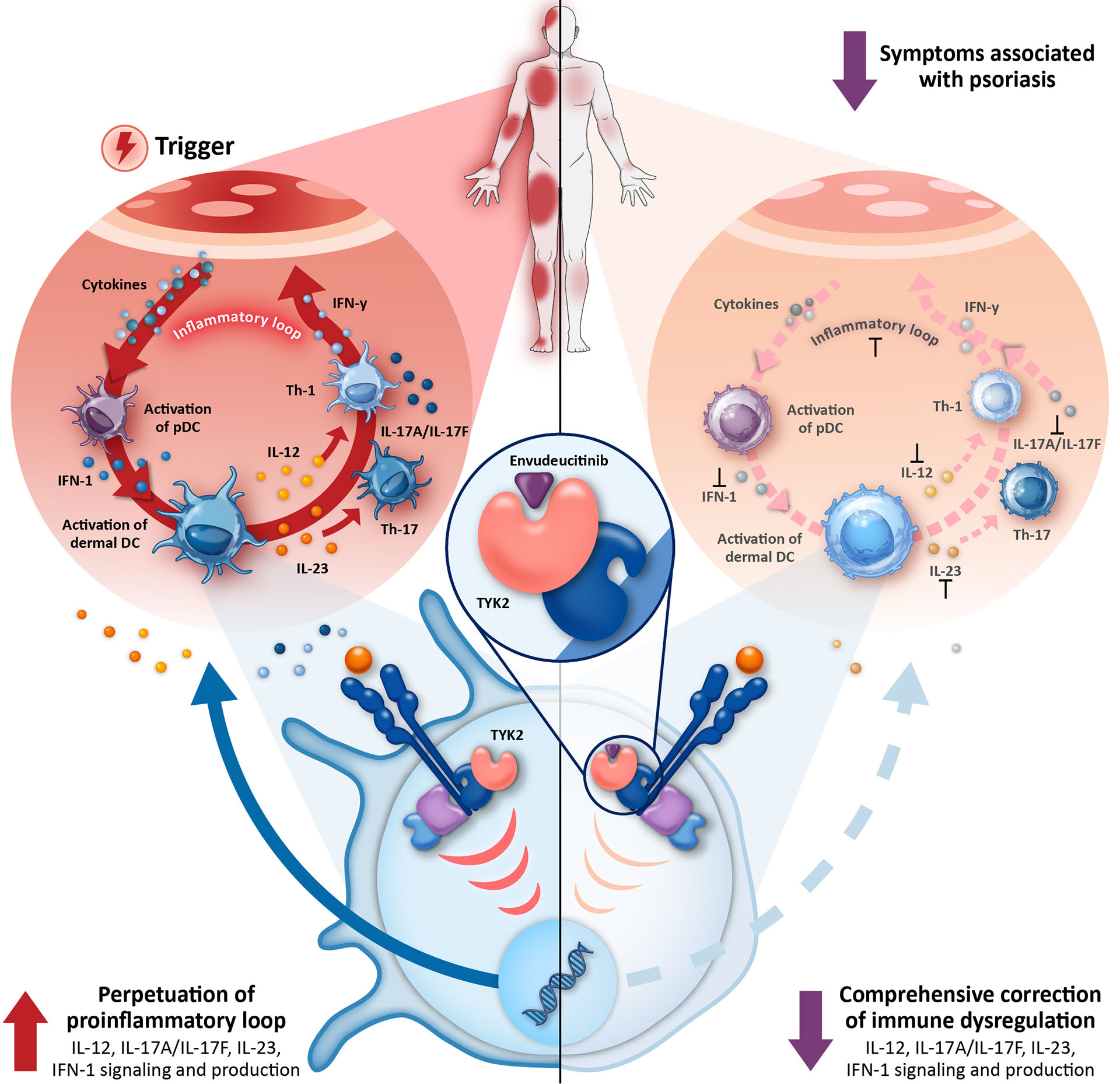
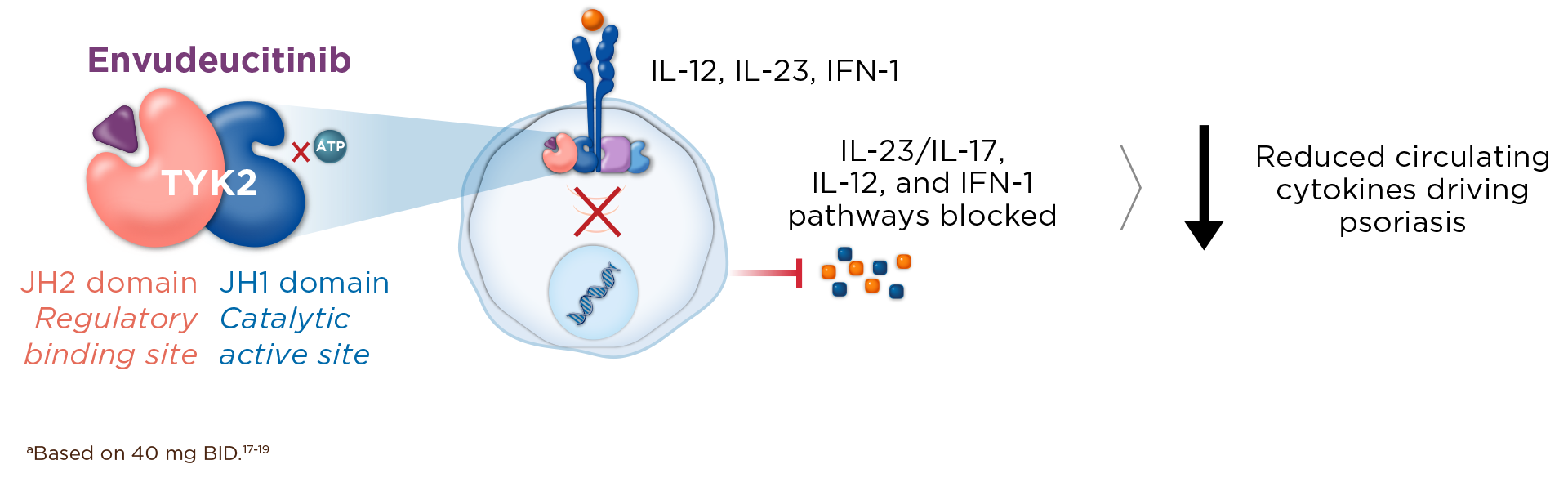
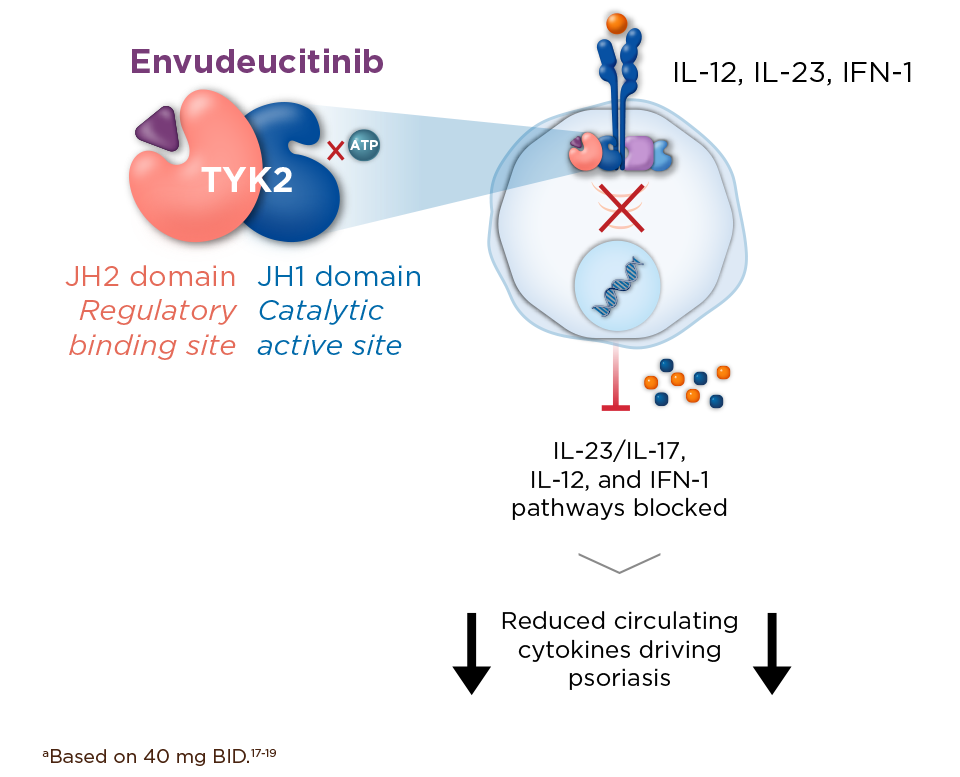
Figure by Armstrong AW, et al. 2026, used under CC BY 4.0.
Proinflammatory signaling in psoriasis and comprehensive correction of immune dysregulation via TYK2 inhibition with envudeucitinib. TYK2 mediates downstream signaling of IL-23 and other cytokines, thereby regulating both Th17 and IL-17A/IL-17F (via IL-23) and type 1 IFN responses (via IL-12), which drive the self-amplifying proinflammatory loop in psoriasis. Inhibition of TYK2 with envudeucitinib provides comprehensive targeting that reduces both the signaling and production of proinflammatory cytokines to correct the immune dysregulation and reduce the clinical signs and symptoms of psoriasis.
Envudeucitinib is an investigational therapy not reviewed or approved by any regulatory agency.
Latest Phase 3 results: ONWARD3 (LTE)
Envudeucitinib Phase 3 ONWARD3 Long-Term Extension Data22,a
Reinforcing the potential of TYK2 inhibition for moderate‑to‑severe plaque PsO
Topline results from the ongoing, global ONWARD3 study
Envudeucitinib delivered consistently high skin clearance rates in the Phase 3 trials, and the long-term data show that the vast majority of patients maintained these responses through 48 weeks
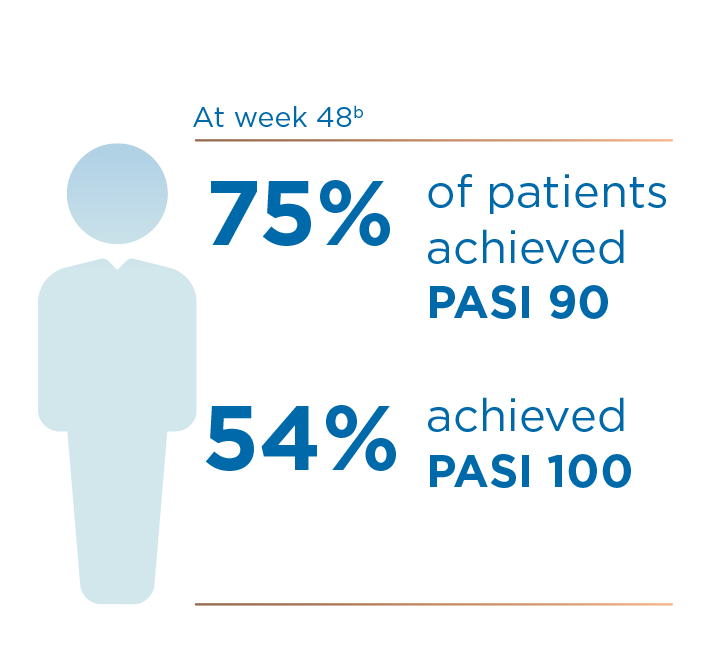
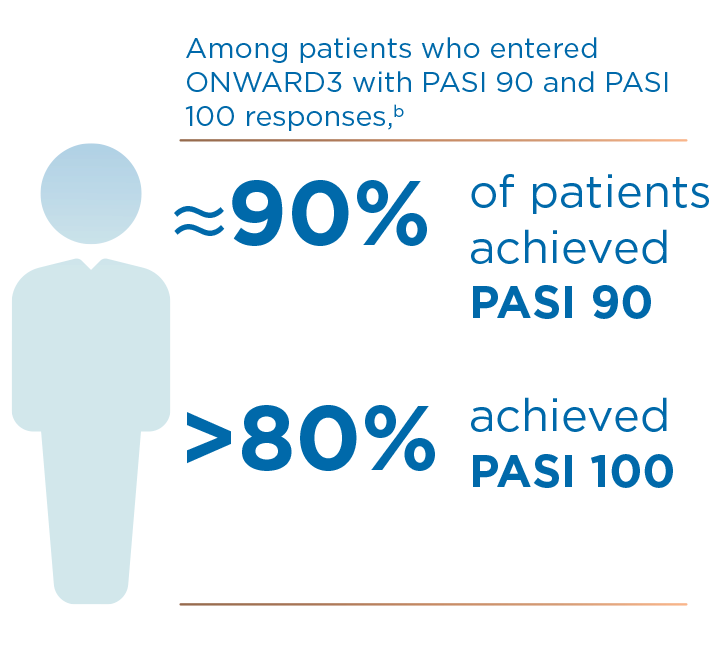
Treatment with envudeucitinib in ONWARD3 continued to be well tolerated, with a safety profile consistent with ONWARD1/2 and no new safety signals observed
A total of 1509 patients entered ONWARD3 from ONWARD1 or ONWARD2, reflecting a robust rollover rate of >85%b
Results from a separate integrated NRI analysis across the ONWARD program (ONWARD1/2 and 3)—evaluating 890 patients originally randomized to envudeucitinib in ONWARD1/2, including those who did not transition into ONWARD3—demonstrated that 66% and 47% of patients who received 48 weeks of envudeucitinib achieved PASI 90 and PASI 100, respectively
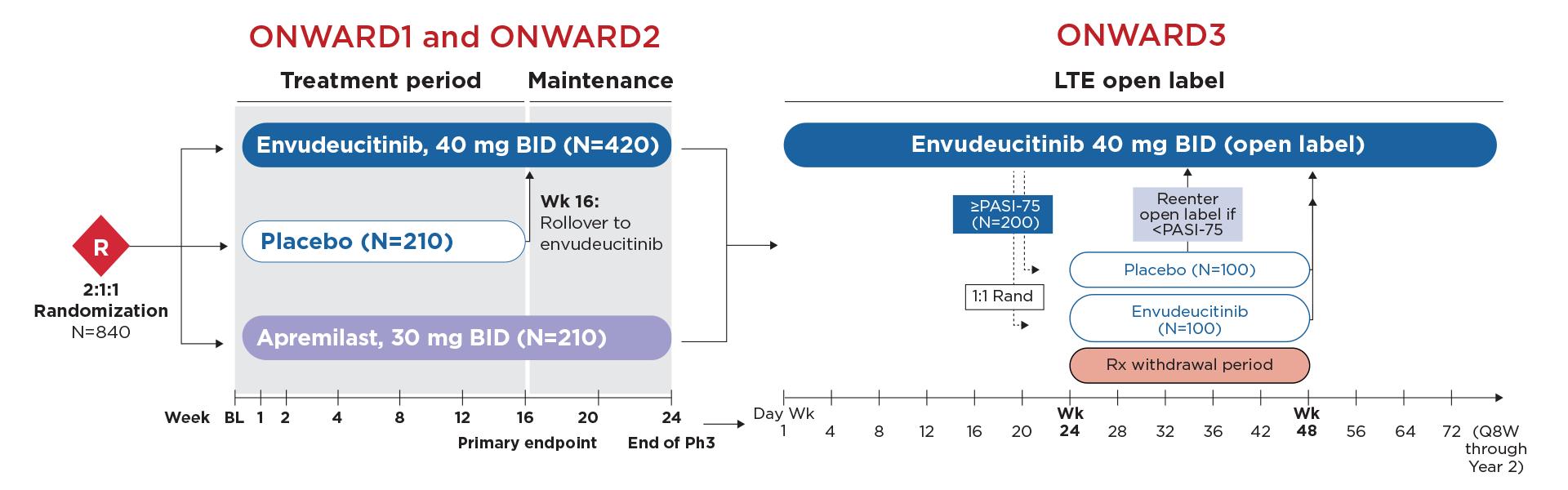
aIn ONWARD3, all patients received open-label envudeucitinib treatment for the first 24 weeks, regardless of their treatment assignment in ONWARD1 and 2. To assess durability and maintenance of response, the first 200 patients achieving PASI 75 at week 24 in ONWARD3 could enter a 24-week RWP, in which they were randomized to receive either blinded envudeucitinib or placebo, and reassigned to open-label envudeucitinib upon loss of response or completion of the RWP, whichever occurred first. Patients not entering the randomized withdrawal period continued to receive open-label envudeucitinib treatment. ONWARD3 is designed to provide up to 96 weeks of long-term safety and efficacy data. bAn NRI analysis was conducted in 773 of these patients from the envudeucitinib arms who received up to 48 weeks of continuous treatment (24 weeks in ONWARD1/2 and up to 24 weeks in ONWARD3).
Envudeucitinib is an investigational therapy not reviewed or approved by any regulatory agency.
Phase 3 ONWARD1 and ONWARD2 results
Envudeucitinib Phase 3 ONWARD1 and ONWARD2 Data20
In the global Phase 3 ONWARD1 and ONWARD2 trials, envudeucitinib met all primary and secondary endpoints with high statistical significance
Envudeucitinib achieved superior skin clearance vs placebo (p < 0.0001) on PASI 75 and sPGA 0/1
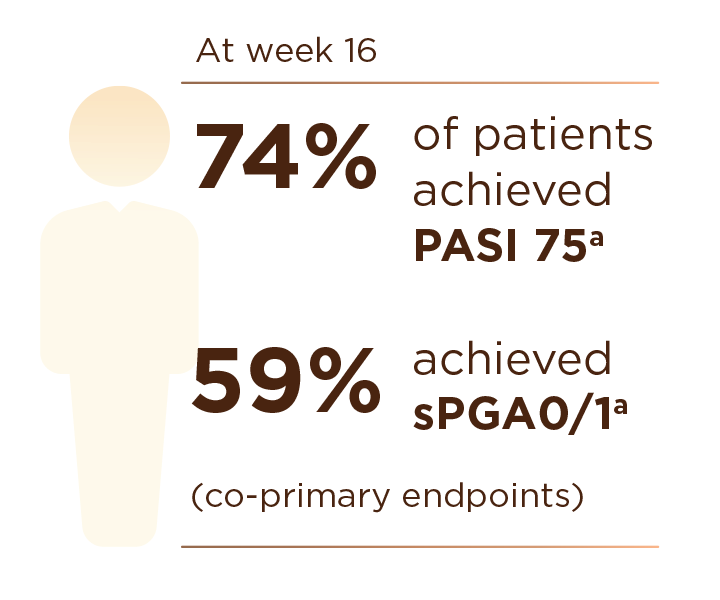
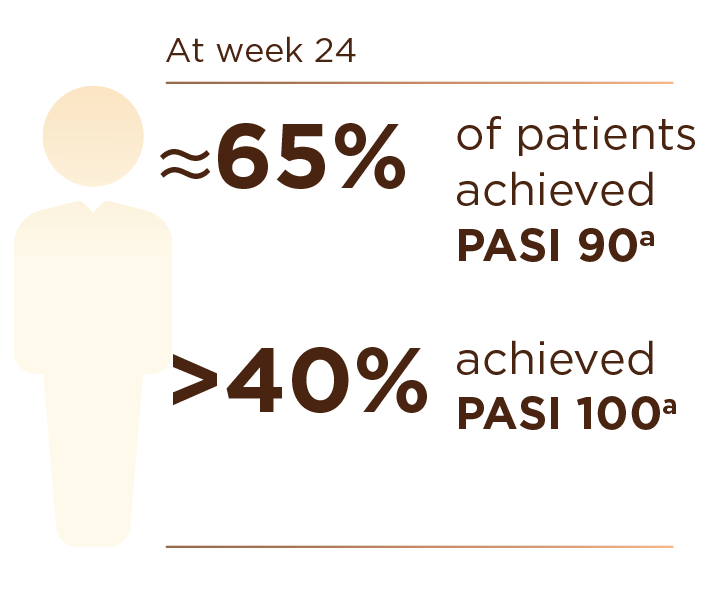
Early onset improvement was observed, with clear separation from placebo on PASI 90 as early as week 4.
Consistent and clinically meaningful improvements across patient-reported outcomes relating to itch and quality of life were observed.
Envudeucitinib also achieved superior skin clearance vs apremilast (p<0.0001) across all PASI endpoints at week 24.
The most common TEAEs were headaches, nasopharyngitis, upper respiratory tract infections, and acne. No new safety signals were observed.
aOn average across both ONWARD1 (NCT06586112) and ONWARD2 (NCT06588738). bTreatment with envudeucitinib was generally well tolerated through week 24 in both trials, with a safety profile consistent with Alumis' Phase 2 program, including the long-term extension trial. TEAE frequency and severity were similar across trials, with the majority being mild to moderate, transient, and responding to standard therapy, if required.
Envudeucitinib is an investigational therapy not reviewed or approved by any regulatory agency.
Explore additional clinical data
Latest Results from the Phase 3 ONWARD Clinical Program
Envudeucitinib Provides Rapid and Sustained Itch Relief, Including Complete Itch Resolution, in Patients With Moderate-to-Severe Plaque Psoriasis: 24 Week Results From the Phase 3 ONWARD1 and ONWARD2 Trials
Hawkes JE, et al. Fall Clinical 2026
Achievement of Clinically Meaningful Treat-to-Target Thresholds With Envudeucitinib in Moderate-to-Severe Plaque Psoriasis: Results From ONWARD1 and ONWARD2
Ehst BD, et al. Fall Clinical 2026
Envudeucitinib (ESK-001) in Moderate-to-Severe Plaque Psoriasis: 24-Week Results From the Randomized, Double-Blind, Active Comparator- and Placebo-Controlled, Phase 3 ONWARD1 and ONWARD2 Studies (encore)
Blauvelt A, et al. Fall Clinical 2026
Envudeucitinib, an oral allosteric TYK2 inhibitor, suppresses inflammatory supraspinous keratinocyte states in psoriasis skin
Narayan NR, et al. EADV 2026
Envudeucitinib (ESK-001) in moderate-to-severe plaque psoriasis: 24-week results from the randomized, double-blind, active comparator–and placebo-controlled, phase 3 ONWARD1 and 2 studies
Blauvelt A, et al. EADV 2026

Envudeucitinib is an investigational therapy not reviewed or approved by any regulatory agency.
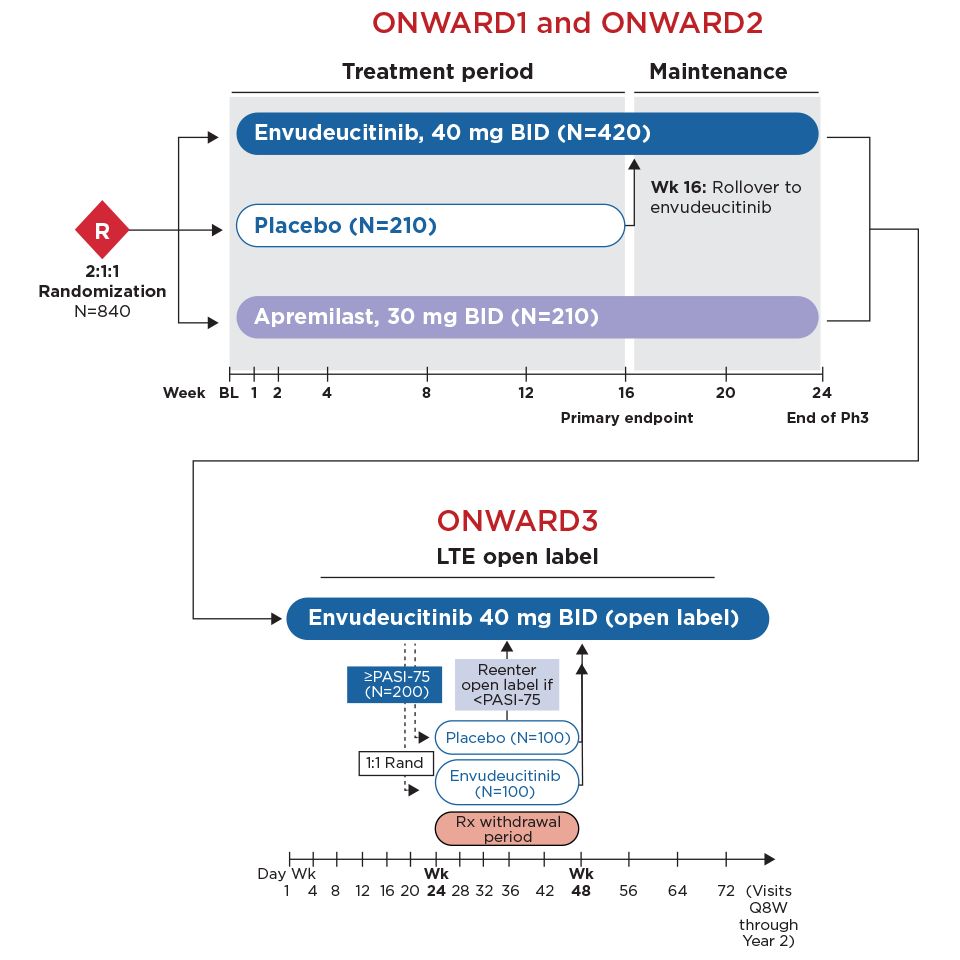
Phase 3 ONWARD Clinical Program20,22
The Phase 3 ONWARD clinical program includes 2 parallel global, multicenter, randomized, double-blind, placebo- and active-comparator-controlled 24-week trials—ONWARD1 (NCT06586112) and ONWARD2 (NCT06588738)—evaluating the efficacy and safety of envudeucitinib in adults with moderate-to-severe plaque psoriasis. More than 1700 patients were enrolled and randomized 2:1:1 to receive envudeucitinib 40 mg twice daily, placebo, or apremilast.
Patients who completed week 24 of ONWARD1 or ONWARD2 were eligible to enter the ONWARD3 (NCT06846541), an ongoing long-term extension study assessing durability, maintenance of response, and long-term safety.
Envudeucitinib is an investigational therapy not reviewed or approved by any regulatory agency.
About Alumis
Alumis is pioneering a precision approach powered by data analytics and scientific insights to address immune dysfunction. Leveraging our deep understanding of TYK2-mediated pathways, we are committed to researching next-generation targeted treatments that can meaningfully transform patient outcomes.
Would you like to receive additional information and updates related to envudeucitinib and psoriasis?
Please provide your name, degree, country, and email.
[form placerholder]
By doing so, you consent to receiving communications via email.
BL, baseline; BID, twice daily; DC, dendritic cell; IFN, interferon; IL, interleukin; JH, Janus kinase homology domain; LTE, long‑term extension; NRI, nonresponder imputation; PASI 75/90/100, ≥75%, ≥90%, or 100% improvement from baseline in Psoriasis Area and Severity Index; pDC, plasmacytoid dendritic cell; Ph, phase; Q8W, every 8 weeks; R, randomization; RWP, randomized withdrawal period; Rx, treatment; sPGA 0/1, static Physician’s Global Assessment of clear (0) or almost clear (1); TEAE, treatment-emergent adverse event; Th1/Th17, T helper 1/17; TYK2, tyrosine kinase 2.
1. Armstrong AW, et al. Nat Rev Dis Primers. 2025;11(1):45. 2. Menter A, et al. J Am Acad Dermatol. 2019;80(4):1029‑1072. 3. Solmaz D, et al. Clin Exp Rheumatol. 2020;38(2):257‑261. 4. Korman NJ. Br J Dermatol. 2020;182(4):840‑848. 5. Lebwohl MG, et al. Dermatol Ther (Heidelb). 2022;12:61‑78. 6. Schmidt L, et al. Dermatol Ther (Heidelb). 2023;13:2019‑2030. 7. Smith SD, et al. J Dermatolog Treat. 2024;35:2339440. 8. Stein Gold L, et al. Presented at: Fall Clinical Dermatology Conference; October 23–26, 2025; Las Vegas, NV. 9. Strober B, et al. J Psoriasis Psoriatic Arthritis. 2025;10(1):22‑27. 10. Strober B, et al. J Am Acad Dermatol. 2020;82(1):117‑122. 11. Jensen LT, et al. EBioMedicine. 2023;97:104840. 12. Martin G. Dermatol Ther (Heidelb). 2023;13:417-435. 13. Griffiths CEM, et al. Lancet. 2021;397(10281):1301‑1315. 14. Singh R, et al. Int J Mol Sci. 2021;22(23):12793. 15. Armstrong AW, et al. JAMA. 2020;323(19):1945‑1960. 16. Krueger JG, et al. J Am Acad Dermatol. 2022;86(1):148‑157. 17. Blauvelt A, et al. J Am Acad Dermatol. 2026;94:57‑65. 18. Papp KA, et al. J Am Acad Dermatol. 2026;94:187‑195. 19. Ucpinar S, et al. Clin Transl Sci. 2024;17:e70094. 20. Alumis’ envudeucitinib delivers leading skin clearance among next‑generation oral plaque psoriasis therapies in phase 3 program. Alumis Inc.; Press release. January 6, 2026. Accessed March 10, 2026. https://investors.alumis.com/news-releases/news-release-details/alumis-envudeucitinib-delivers-leading-skin-clearance-among-next. 21. Armstrong AW, et al. Dermatol Ther (Heidelb). 2026;16(6):2661-2673. 22. Envudeucitinib long-term data positioned to set a new standard for plaque psoriasis treatment, delivering highest reported PASI 100 skin clearance among oral therapies. Alumis Inc.; Press release. August 10, 2026. Accessed August 25, 2026. https://investors.alumis.com/news-releases/news-release-details/envudeucitinib-long-term-data-positioned-set-new-standard-plaque. 23. Blauvelt A, et al. Envudeucitinib (ESK-001) in moderate-to-severe plaque psoriasis: 24-week results from the randomized, double-blind, active comparator- and placebo-controlled, phase 3 ONWARD1 and 2 studies. Presented at: American Academy of Dermatology (AAD) Annual Meeting; Denver, CO; March 27-31, 2026.
Envudeucitinib is an investigational therapy not reviewed or approved by any regulatory agency.